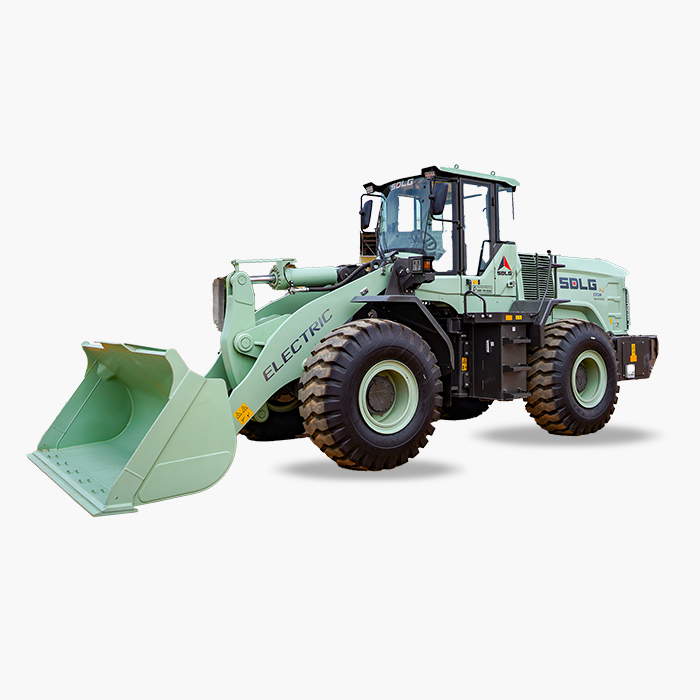
After 18 months of pilot deployments across mining, infrastructure and ports, the L960HEV has officially moved from limited build to full volume production at our Bangalore facility — making it the first volume-built electric wheel loader in the Indian market.
The L960HEV programme started in 2022 with a clear hypothesis: the Indian construction equipment market would adopt electric machines once total cost of ownership over five years crossed below the equivalent diesel platform. The pilot phase, which ran from October 2024 through February 2026, was designed to test that hypothesis under real Indian operating conditions — not on a closed track, not in a controlled facility, but at customer sites running paying production cycles.
·What the pilot programme proved
Twelve L960HEV units were deployed across nine pilot customers — three open-cast mining operators in Odisha and Chhattisgarh, two cement-plant captive fleets, two port terminals on the western coast, and two infrastructure contractors on metro and airport projects. Together, the pilot fleet logged 14,800 hours of operating data over 16 months.
Three findings shaped the production decision. First, energy cost per tonne moved came in 38% lower than the comparable diesel L959H on the same duty cycle — substantially better than our pre-pilot forecast of 28%. Second, scheduled maintenance hours dropped 52% versus diesel, driven by the absence of engine oil changes, injection-system service and exhaust after-treatment. Third, on-site noise dropped from 78 dB to 61 dB — a step change that opened up night-shift and urban-construction work that diesel platforms cannot do.
- Energy cost / tonne−38%
- Maintenance hours−52%
- Noise on site61dB
- Pilot fleet hours14,800hrs
·The volume production plan
The Bangalore facility has now been retooled to produce up to 240 L960HEV units annually, with a flexible line that shares 60% of station capacity with the diesel L959H platform. The first 24 units of the volume run are already in build; deliveries to confirmed orders begin April 2026. The order book stands at 96 machines as of this announcement, weighted toward mining (52 units), ports (24 units) and infrastructure (20 units).
We are also expanding the dealer network's electric competence. Twelve dealer branches across mining and port geographies have been certified for L960HEV service, and we have placed dedicated electric-machine field engineers in five regional service hubs. Battery swap-and-go stations — the linchpin of running an electric loader on a 22-hour duty cycle — are operational at four pilot customer sites and will be available as a turnkey package to all production customers from Q3 2026.
·What the L960HEV actually replaces
Customer fleet planning teams ask the most useful question of all: which diesel loader does this swap out, and what's the payback? The honest answer is that the L960HEV today makes the strongest economic case in three operating profiles. One — captive fleets running predictable two- or three-shift duty cycles where battery swap stations make sense. Two — sites with on-site solar generation where marginal energy cost is near zero. Three — applications where on-site emissions or noise are operationally limiting, like urban metro construction or environmentally-sensitive port operations.
For a mining operator running 18 hours a day across 300 operating days a year, our finance partners' models show payback inside 32 — 38 months at current diesel and grid tariffs. As diesel prices and emission regulations continue to tighten, that window keeps narrowing. We expect the L960HEV to be the right answer for a third of Indian wheel-loader applications by 2028, and a default question on every fleet-renewal RFQ from 2026 onward.
·Sustainability metrics
The pilot fleet of 12 machines avoided an estimated 1,840 tonnes of CO2 emissions over 16 months versus an equivalent diesel deployment. Scaled to a 240-unit annual production run, our base case projects an annual avoided CO2 footprint of 36,000 tonnes by 2028. We are publishing a detailed sustainability methodology paper alongside this announcement — open to peer review and customer scrutiny.
·What's next
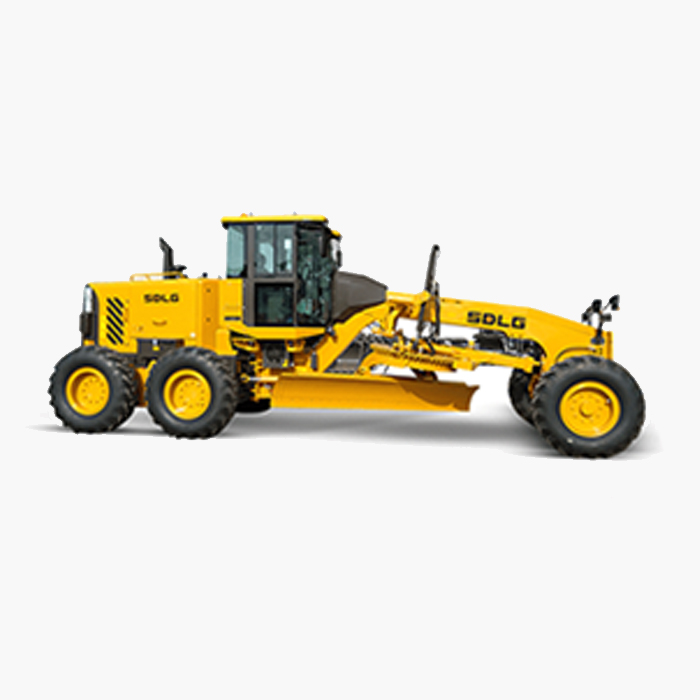
Volume production of the L960HEV is the first chapter, not the last. Two follow-on platforms are in the engineering pipeline — an electric variant of the L9100H 7-tonne loader for heavy quarrying, and a hybrid-electric G-series motor grader prototype targeted at urban and airport surface-finish applications. Both will go to pilot in 2027.
Pilot programme data audited by an independent third party. Detailed methodology and customer testimonials available on request from the SDLG India press office at press@sdlgindia.com.